 Ancient animals. Modern nutrition.
Pet aquatic turtles, such as sliders, painted, map, musk and cooter turtles, are omnivores. Feed a quality floating turtle pellet as the base of the diet, add leafy greens, and offer insects, worms or snails as occasional extras. Feed young turtles daily and adults every two to three days, and give only what they eat in a few minutes.
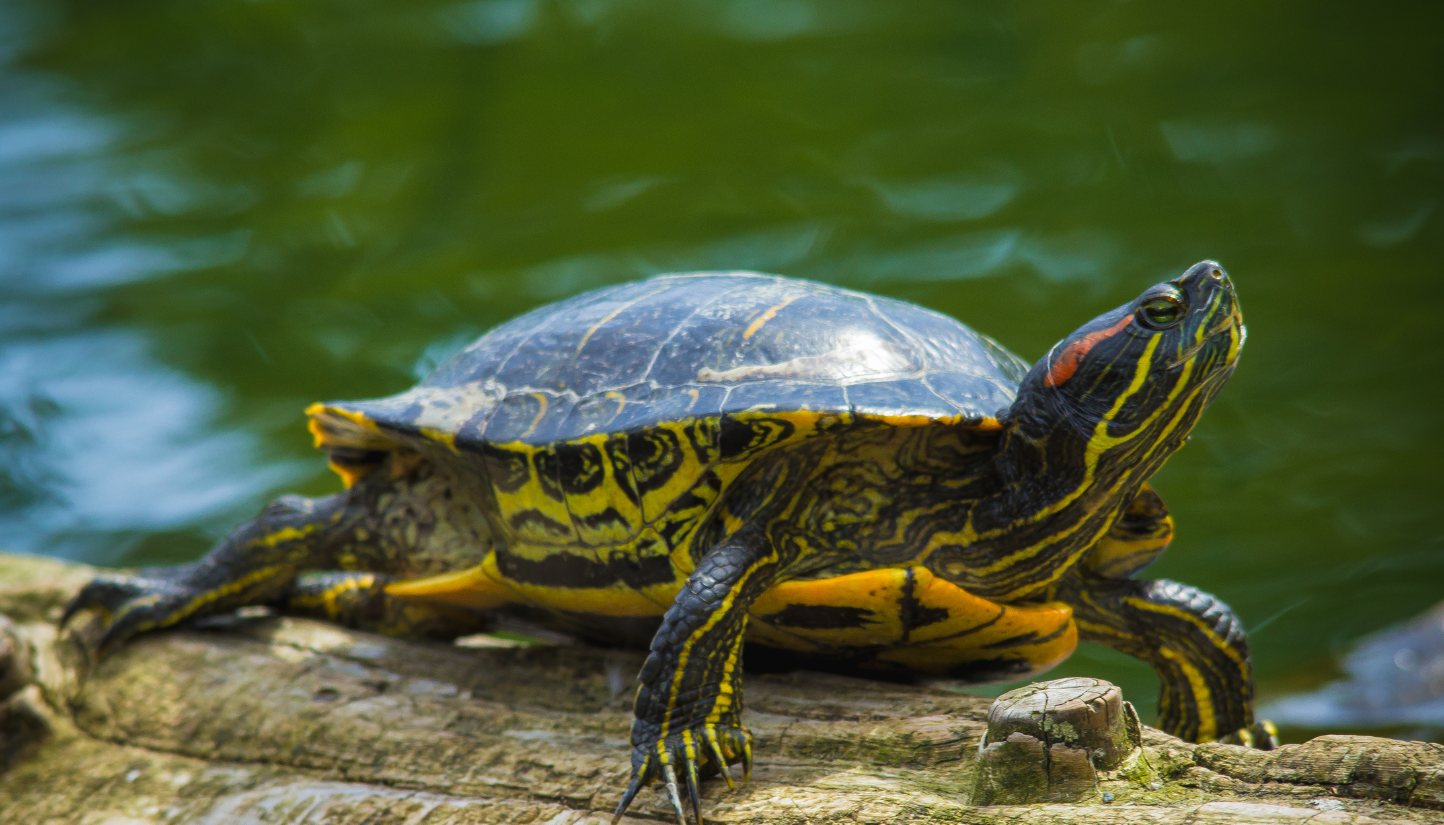
This guide is for aquatic and semi-aquatic pet turtles. Tortoises and box turtles live on land and need different diets.
The simple daily routine
| Part of the diet | What to give | How often |
|---|---|---|
| Turtle pellets (the base) | A high-protein aquatic-turtle pellet with named animal proteins first | Young turtles daily; adults every 2–3 days |
| Leafy greens | Romaine, collard, mustard, turnip or dandelion greens; aquatic plants like duckweed | Offer most days |
| Animal extras | Earthworms, crickets, mealworms, snails; feeder fish only occasionally | Occasionally, for variety (adults need less animal food than juveniles) |
Food lists and frequencies: VCA Animal Hospitals (VCA). VCA notes that juvenile sliders are mainly carnivorous and become more omnivorous with age, with animal foods making up to about two-thirds of a juvenile's diet and about half of an adult's.
Why the pellet matters most
The pellet is the one food your turtle gets at almost every meal, and veterinarians note that an improper diet is the most common cause of health problems in captive aquatic turtles (VCA). Commercial turtle foods vary widely, generally from about 30% to 50% protein (Merck), so it pays to read the label.
What to look for:
- Named animal proteins (fish, shrimp, krill, insects) as the first ingredients
- Protein, fat, calcium and phosphorus listed, with calcium higher than phosphorus
- Some plant ingredients for an omnivore
- A pellet size your turtle can swallow; floating pellets make leftovers easy to spot
Our ingredient-by-ingredient breakdown: What's in a high-quality turtle pellet.
Where Archelon fits
Archelon is a complete floating diet for aquatic and semi-aquatic turtles, formulated with turtle-breeder input:
- 45% crude protein from White Fish Meal (Pacific whiting), shrimp, krill and black soldier fly larvae
- Kelp, spirulina and dandelion for plant matter
- 3:1 calcium to phosphorus
- 3.0 mm floating pellet, made with no corn, no soy, no artificial colors and no ethoxyquin
Package directions: feed 1–2 times daily, only what your turtle eats in 5–10 minutes, adjusted for size; remove uneaten food.
"Depending on the turtles, some eat live prey, fish, crustacean, mollusk. Plant matter sometimes."
Eric Akaba, Archelon founding partner
Feeding guides by turtle
Foods to avoid
- Bread, hot dogs and lunch meat
- Raw grocery-store meat or chicken (poor calcium-to-phosphorus balance)
- Iceberg lettuce
- Mostly-fish diets and oily fish like smelt and mackerel
- Wild-caught fish and amphibians
Source: VCA.
"If you drop a piece of bread and they'll eat it, it doesn't mean they're going to be healthy."
Eric Akaba
Questions owners ask
How much should I feed my turtle?
Offer what it eats in a short sitting, then remove leftovers. Archelon's directions say 5–10 minutes. Young turtles shouldn't be pushed to grow too fast (Merck).
Can turtles eat fish food?
VCA lists high-grade turtle or fish pellets as an acceptable base (VCA). Check that the label lists calcium and phosphorus. A turtle builds a shell; fish don't.
My turtle stopped eating. Should I change foods?
Check water temperature and basking setup, and see a reptile veterinarian if it keeps refusing food.
Sources: VCA Animal Hospitals, "Feeding Aquatic Turtles" (Rich, Hess & Axelson, updated 2024); Merck Veterinary Manual, "Nutrition in Turtles" (Nijboer & Fens, reviewed 2025); Archelon package label; Eric Akaba interview, Archelon (2026).