 Ancient animals. Modern nutrition.

For a baby slider or painted turtle, start with an aquatic-turtle pellet it can pick up and swallow, alongside appropriate greens and occasional small animal foods. Healthy juveniles generally eat daily. The first purchase to get right is pellet size: a food cannot serve as a staple if the hatchling cannot eat it.
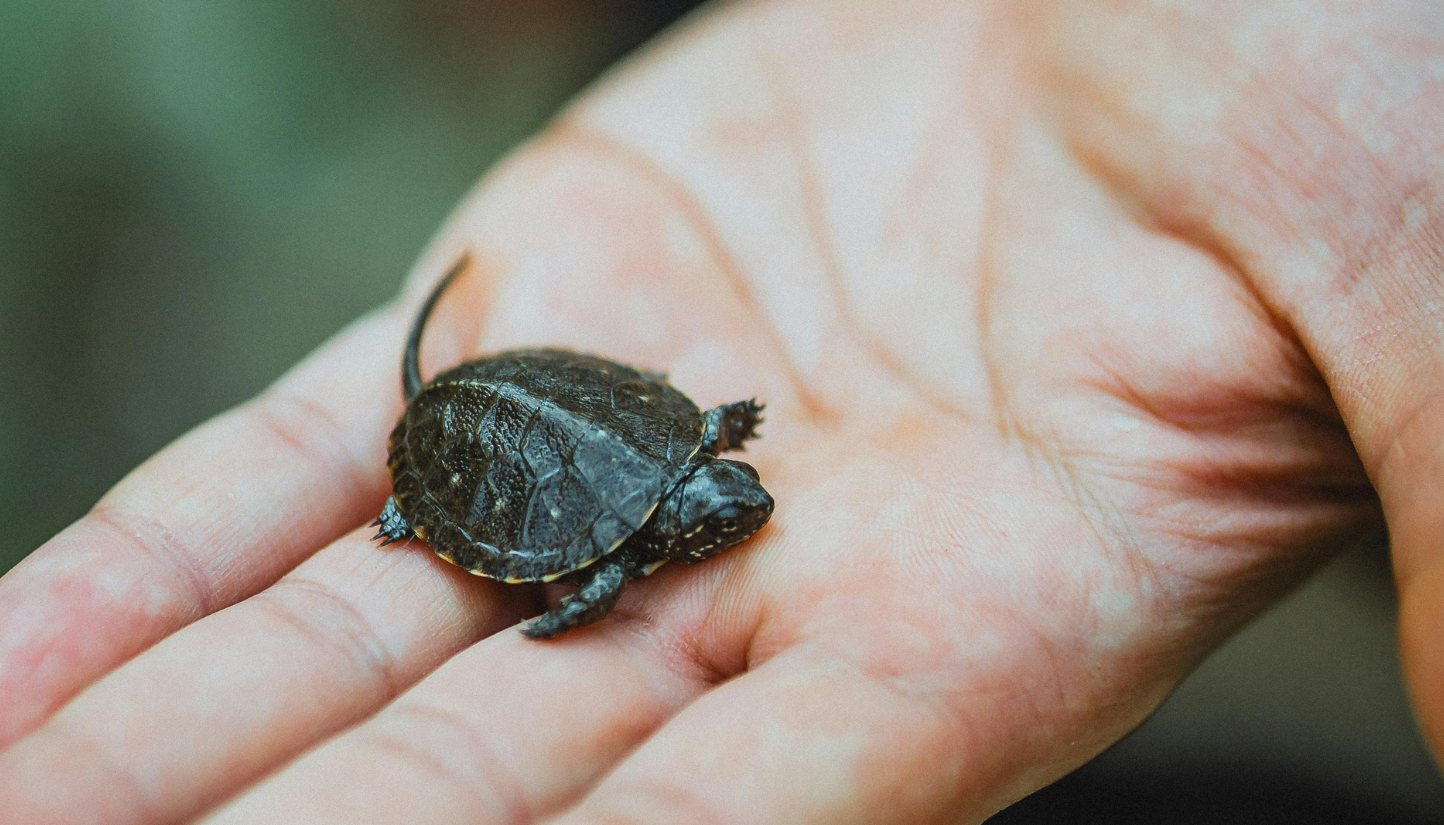
This guide covers baby aquatic pet turtles, especially sliders and painted turtles. A baby tortoise needs different advice. Identify the species before buying food; small size alone does not tell you what the animal eats.
What baby turtles need
- Lots of animal protein. Young aquatic turtles are mainly carnivorous, with animal foods making up to about two-thirds of the diet (VCA). In one study, juvenile sliders fed 25% and 40% protein grew more than those fed 10% (Avery et al., 1993). That comparison does not establish one ideal protein percentage for every baby turtle.
- Daily meals. Healthy juveniles eat heartily every day (VCA).
- Measured portions. Young turtles shouldn't be pushed to grow too fast (Merck).
- Calcium. Choose a food that lists calcium above phosphorus.
What to buy for a baby turtle
| Item | What to look for |
|---|---|
| Main food | An aquatic-turtle pellet with named animal proteins first and a size your turtle can swallow |
| Extras | Small earthworm pieces, crickets or mealworms (VCA) |
| Greens | Romaine, collard or dandelion greens, offered even if ignored at first |
About Archelon for baby turtles
Archelon is a 45% protein floating pellet built on fish, shrimp, krill and insect protein, with 3:1 calcium to phosphorus. The pellet is 3.0 mm. A very small hatchling may not manage that size yet, so watch that your turtle swallows a pellet easily, and use a smaller food until it can. Our pellet size guide shows what to look for. See what's in Archelon.
How to feed a baby turtle
- Feed in the water. Aquatic turtles eat with their heads underwater (VCA).
- Offer pellets once or twice a day, only what's eaten in a few minutes. Archelon's directions say 5–10 minutes.
- Add small animal foods and greens through the week.
- Remove leftovers so the water stays clean.
Foods to keep away from baby turtles
Bread, hot dogs and lunch meat, raw grocery-store meat, iceberg lettuce, wild-caught fish or tadpoles, and lots of feeder fish (VCA).
A first-week feeding record
Write down the food name and pellet size before the first meal. For each feeding, note what you offered, what was eaten and what you removed. A brief record is more useful than trying to remember whether the turtle ate yesterday.
| Watch for | Record | What to check next |
|---|---|---|
| Picks up and swallows pellets | Food name, size and amount eaten | Keep the presentation consistent so later changes are easy to spot |
| Mouths food, then drops it | Whether this happens with every pellet | Check size and accessibility; do not assume the hatchling dislikes the flavor |
| Food drifts behind equipment | Where it collects | Offer it where you can watch the turtle reach it |
| Another turtle takes the meal | Which turtle actually ate | A disappearing meal does not prove every turtle was fed |
This is an observation checklist, not a way to diagnose appetite problems. Persistent refusal or difficulty swallowing needs a reptile veterinarian.
How many pellets should a baby turtle eat?
There is no useful universal pellet count. Ten tiny pellets and ten large pellets are different amounts, and formulas differ too. Use the directions for the food you actually bought, account for extras, and ask your reptile veterinarian to help set a portion for the species and individual.
Archelon's label describes a 3.0 mm floating pellet. Do not choose it solely because the package says aquatic turtle: check whether your hatchling can handle that size. Our pellet format guide explains what to observe. A smaller pellet can be the more practical purchase.
Greens, treats and the next food change
Put the staple food, greens and any treats on the same feeding record. If several people feed the turtle, use one shared note so meals are not accidentally repeated. Introduce unfamiliar foods separately; changing the staple, treats and feeding container together makes a refusal hard to interpret.
Use our vegetable guide for named greens and our food-transition guide when the current pellet becomes unavailable. Neither is a reason to delay a vet visit for a turtle that has stopped eating.
Questions new owners ask
My baby turtle won't eat. What should I do?
Check that the water and basking area are set up correctly for your species, and contact a reptile veterinarian if your turtle keeps refusing food.
Should I feed more so it grows faster?
No. Steady growth is the goal; Merck cautions against growing young turtles too fast.
Sources: VCA Animal Hospitals, "Feeding Aquatic Turtles" (2024); Merck Veterinary Manual, "Nutrition in Turtles" (2025); Avery et al. (1993), Physiological Zoology; Archelon package label.
Written by Archelon Editorial. How we research these guides. General feeding information; individual needs vary by species, age and health.