 Ancient animals. Modern nutrition.

Buy floating pellets if your turtle takes food at the surface, which most sliders, painted turtles and cooters do. Buy sinking pellets if your turtle feeds along the bottom, like musk and mud turtles, or if it is too small to manage what floats in your tank. Either way, pick the formula first: floating or sinking says nothing about nutrition.
Use one feeding to check accessibility
Offer the food where you can see it, then note where it travels and what the turtle does. Record the pellet size, the format and any leftovers. If you compare two foods, note every difference on the labels; a change in ingredients, size and buoyancy at once cannot tell you which difference mattered.
A simple note might read: “Floating food collected behind the basking platform; turtle did not reach it.” That is an observation, not a feeding result we claim for a product. It tells you what to check next without labelling the turtle a picky eater.
Format and nutrition are two separate questions
Floating or sinking tells you where the pellet goes, not what's in it. A poor formula doesn't improve because it floats.
So settle the nutrition question first. Pet food ingredients are listed from most to least by weight (FDA), so the first few ingredients tell you what the pellet is mostly made of. Commercial turtle foods run about 30–50% protein and vary widely between brands (Merck). Veterinary guidance also warns against foods with a poor calcium-to-phosphorus balance (VCA). Our guide to high-quality turtle pellets walks through those label checks.
Then use format and size to choose between the formulas that pass.
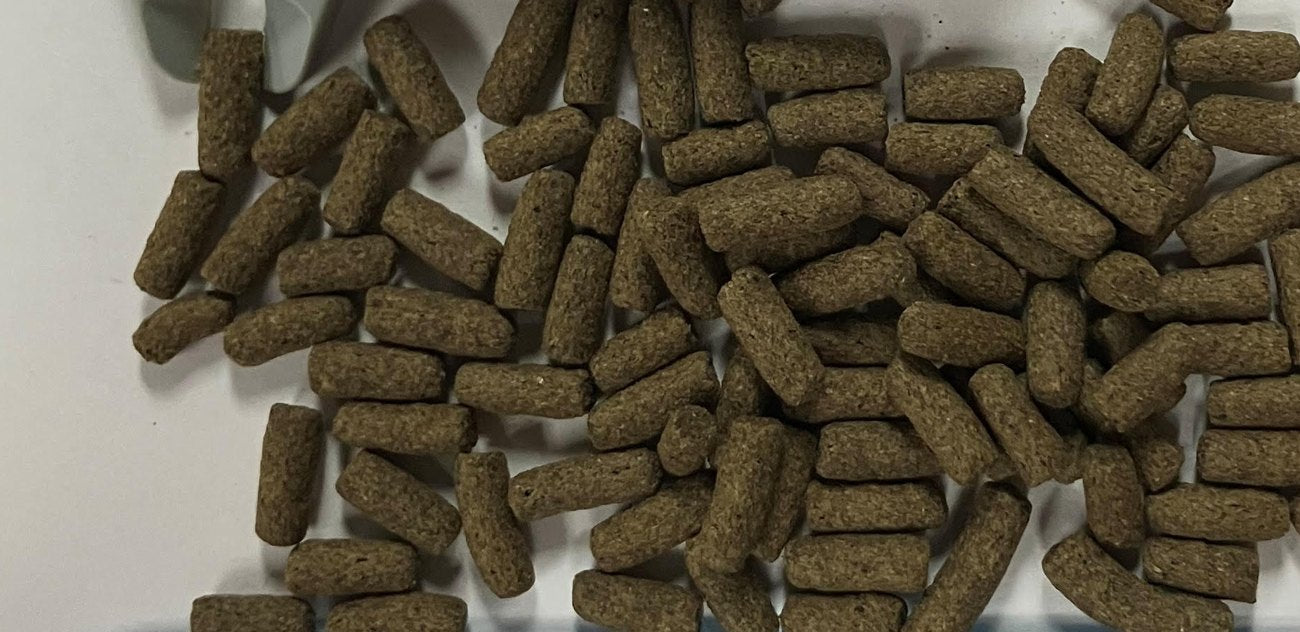
Floating vs. sinking pellets compared
Aquatic turtles eat and swallow with their heads underwater (VCA). What changes between formats is where your turtle finds the food, and how easily you can see what's left.
| Floating pellets | Sinking pellets | |
|---|---|---|
| Suited to | Turtles that come to the surface to eat, and owners who want to see exactly how much was eaten | Bottom feeders, and small turtles that are slow to take food at the surface |
| Easy cleanup? | Yes. Leftovers stay on top, where you can see them and net them out. | Harder. Leftovers settle into gravel and behind decor, where they're easy to miss. |
| Watch out for | Filter current pushing pellets into corners or behind the basking dock, out of your turtle's reach | Assuming a meal is finished because you can't see any food, when pellets are still on the bottom |
Whichever you choose, scoop out leftover food every day to keep the tank clean (VCA).
Match the format to how your turtle eats
Surface feeders. Sliders, painted turtles and cooters usually swim up to take food from the surface. A floating pellet suits them well. See our red-eared slider and painted turtle feeding guides.
Bottom feeders. The common musk turtle spends much of its time walking the bottom and searching the sediment for food, and it can't use suction to pull prey in, so food has to be right in front of its mouth (Animal Diversity Web). For musk and mud turtles, sinking food is often the easier choice. Our musk and mud turtle food guide covers what else they need.
Not sure? Watch one normal feeding. Note where the food lands, whether your turtle finds it, whether it can catch and swallow it, and where any leftovers end up. If the food drifted out of reach, that's a format problem, not a picky turtle.
If you test both formats, use the same food if you can. Switching from one brand's floating pellet to another brand's sinking pellet changes the ingredients and the size too, so you won't know which change made the difference.
Pellet size: smaller isn't always worse
Size matters as much as buoyancy. VCA notes that larger pellets tend to float and appeal to large turtles, while smaller pellets tend to sink quickly and are generally accepted by juveniles and small turtles (VCA).
A "small turtle" can mean a hatchling or an adult of a small species, and those aren't the same. Don't judge size from an online photo without a scale. If you're feeding a hatchling, start with our baby turtle feeding guide.
How to check the size is right
You don't need a ruler. Watch your turtle eat.
- Right size: it takes a pellet, swallows it, and goes for the next one.
- Too big: it mouths pellets and drops them, tears at them, or leaves a trail of crumbs.
- Too small for its size: it misses pellets or picks at them one by one and loses interest before the meal is done.
A smaller pellet is often easier to portion and observe than a crushed one. Breaking a pellet changes its size, but it does not change the formula or establish that the food suits a hatchling. Follow the maker's preparation directions and watch what your turtle can manage. If your turtle struggles to eat or swallow whatever you offer, see a reptile vet rather than trying more foods.
Where Archelon fits
Archelon is a 3.0 mm floating pellet made for aquatic and semi-aquatic turtles. That format suits surface-feeding turtles like sliders, painted turtles and cooters that are big enough to take a 3 mm pellet. It's not the right format for every turtle: a bottom-feeding musk turtle or a hatchling too small to swallow it may do better on a smaller sinking food. On nutrition, the label lists 45% crude protein (min), White Fish Meal as the first ingredient, and a stated 3:1 calcium-to-phosphorus ratio. Read the full label and judge it the same way you would any other.
Comparing value fairly
Containers come in different sizes, so compare price per ounce or per pound, not price per container. Divide the price you'd pay by the net weight on the label, treating shipping the same way for every product. Brands must state net quantity on the package (FDA), so the number is there.
Price per ounce compares cost, not quality, so only compare foods that pass your label checks. A big bag isn't a bargain if it sits open for months: FDA recommends keeping pet food in its original bag or container, in a cool, dry place under 80°F (FDA). Buy a size you'll actually use.
Common questions
Can I feed both floating and sinking pellets?
Yes, as long as both are good formulas. In a tank that houses a surface feeder and a bottom feeder together, offering both lets each turtle eat where it's comfortable. Keep track of the total amount so you don't overfeed.
Does feeding in a separate tub change which format I should buy?
It makes cleanup easier with either one. VCA notes that aquatic turtles can be fed in a separate small container of warm water (VCA), so leftovers never reach the main tank. Buy the format that matches how your turtle likes to eat.
My turtle ignores floating pellets. Should I switch to sinking?
First check whether it can reach them. Filter current and decor often carry floating food away. If it can reach them and still won't eat, a change of format may help. But if a turtle that used to eat well stops eating, see a reptile vet. For how to change foods, see switching turtle food.
Sources: VCA Animal Hospitals, "Feeding Aquatic Turtles" (2024); Merck Veterinary Manual, "Nutrition in Turtles" (2025); FDA, "Pet Food"; FDA, "Proper Storage of Pet Food and Treats"; Animal Diversity Web, University of Michigan, "Sternotherus odoratus"; Archelon package label.
Written by Archelon Editorial. How we research these guides. General feeding information; individual needs vary by species, age and health.