 Ancient animals. Modern nutrition.

Yes, some fruit is fine as an occasional treat for an adult aquatic turtle. Veterinary guidance names berries and melons as good treats. Food lists disagree about some fruits, so this guide separates named recommendations from foods we cannot confidently recommend as routine choices. No fruit belongs in the staple diet, which should be a turtle pellet plus leafy greens.
Fruit is a treat, not part of the base diet
Start with what your turtle eats every week. MedVet's aquatic turtle guidance says commercial pellets should make up the majority of the diet, with a variety of greens and some vegetables alongside (MedVet). VCA describes the plant part of the diet as vegetables, mainly dark leafy greens, not fruit (VCA).
Fruit appears in that guidance only as a treat, and only for adults: "Berries and melons make good treats for the adult aquatic turtle" (MedVet). So you can skip fruit entirely and your turtle loses nothing it needs. If you do offer it, keep it small and occasional, on top of a diet that's already complete.
For the full weekly routine, see what to feed a pet turtle. For the vegetable side of the diet, see vegetables for turtles.
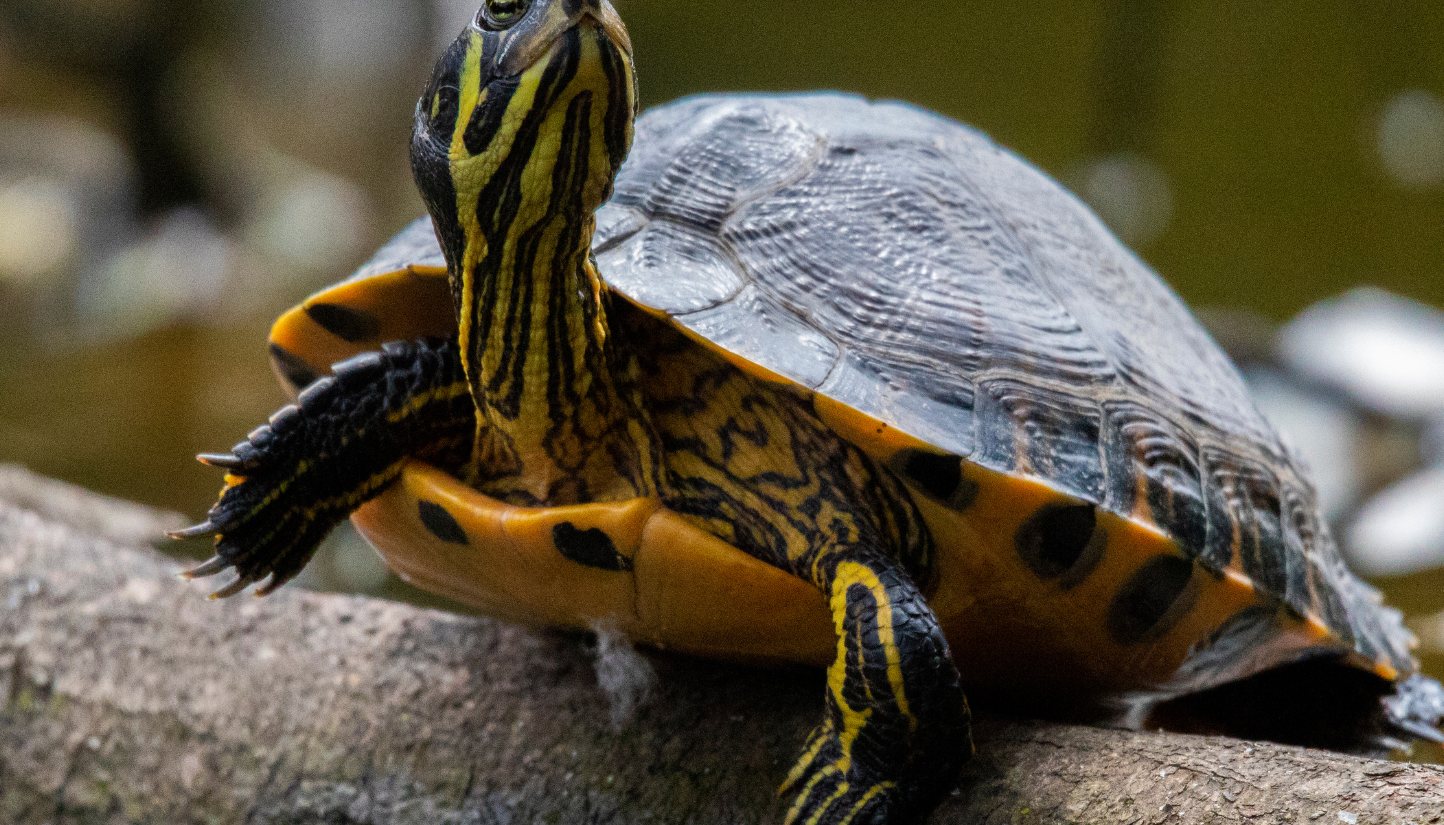
Which fruits are OK, at a glance
This table only covers fruits the veterinary sources actually address. Where they disagree, it says so.
| Fruit | OK as a treat? | Note |
|---|---|---|
| Berries | Yes, for adults | Named as a good treat for adult aquatic turtles (MedVet) |
| Melons | Yes, for adults | Named as a good treat for adult aquatic turtles (MedVet) |
| Strawberries | Sources disagree | A berry, but listed among "unsuitable foods" for aquatic turtles by Vétérinaires.ch (Vétérinaires.ch). That disagreement does not establish toxicity; fruit can simply be left out. |
| Apples | Not a routine recommendation here | Listed among "unsuitable foods" for aquatic turtles (Vétérinaires.ch) |
| Bananas | Not a routine recommendation here | Listed among "unsuitable foods" for aquatic turtles (Vétérinaires.ch) |
Grapes are not assessed in the references used here. An omission is not evidence that a food is poisonous, and a broad category such as berries is not a safety assessment of every berry. These are limits of the available guidance, not reasons to experiment. Fruit is optional.
How often to offer fruit
None of the veterinary sources give a fruit schedule or a serving size, so we won't invent one. Here's what they do say:
- Treats are for adults. MedVet names fruit as a treat for the adult aquatic turtle (MedVet). Young turtles are mainly carnivorous, with animal foods making up as much as two-thirds of their diet (VCA), so their meals are better spent on pellets and protein. See what baby turtles eat.
- Adults eat less often. Adult turtles may need a good-sized meal only every two or three days (VCA). MedVet suggests every other day (MedVet). With that few meals, a fruit treat takes up a real share of the week, so keep it occasional.
- The base comes first. Pellets should still make up the majority of the diet (MedVet). If fruit starts showing up at most feedings, it isn't a treat anymore.
If more than one person in your house feeds the turtle, agree on who gives treats and when. Small extras add up quickly when nobody is keeping track.
How to serve fruit
- Fresh and plain only. The guidance names the fruit itself. Jam, dried fruit with added sugar, canned fruit cocktail and fruit-flavored snacks are different foods with other ingredients. Processed human foods should never be fed to turtles (VCA).
- Feed it in water. Aquatic turtles need to eat in water (MedVet). You can use a separate container so leftovers don't dirty the main tank (MedVet).
- Take out leftovers. Fruit breaks down fast in water. Remove whatever your turtle doesn't eat after the meal.
- Try one new fruit at a time. Then you'll know which food your turtle actually ate or refused.
Keep treats separate from the staple decision
A fruit treat should not decide which staple you buy. Compare the staple's label, intended use and pellet size on their own merits. We make Archelon; its label is available to read, and our pellet-label guide explains the same checks for any food.
If several people feed the turtle, agree who offers extras and write them down. This avoids a small treat being repeated by each person during the same day.
Common questions
Can turtles eat blueberries or watermelon?
The veterinary guidance speaks of "berries and melons" in general and doesn't name individual kinds (MedVet). Blueberries are berries and watermelon is a melon, so they fall under that general treat category for adults. Offer them fresh, plain and occasionally.
Why do some websites say apples and bananas are fine?
The references used here do not establish a universal answer for every species. One care sheet lists apple and banana as unsuitable; that does not by itself establish toxicity or a safe serving size (Vétérinaires.ch). Before you trust a list, check which heading the food sits under.
My turtle will only eat fruit. Is that OK?
No. Don't let a favorite treat replace the regular diet. A change in appetite can be a sign of many different problems (VCA), so if your turtle refuses its usual food, have it checked by a reptile vet. For a healthy turtle that's just picky, see switching turtle food.
Does my turtle need fruit at all?
No. The veterinary guidance lists fruit only as a treat (MedVet). A turtle eating a good pellet, leafy greens and occasional animal foods isn't missing anything if it never gets fruit.
Sources: MedVet, "Aquatic Turtle Care Recommendations"; VCA Animal Hospitals, "Feeding Aquatic Turtles" and "Common Diseases of Aquatic Turtles"; Vétérinaires.ch, "Aquatic turtles"; Archelon package label.
Written by Archelon Editorial. How we research these guides. General feeding information; individual needs vary by species, age and health.